
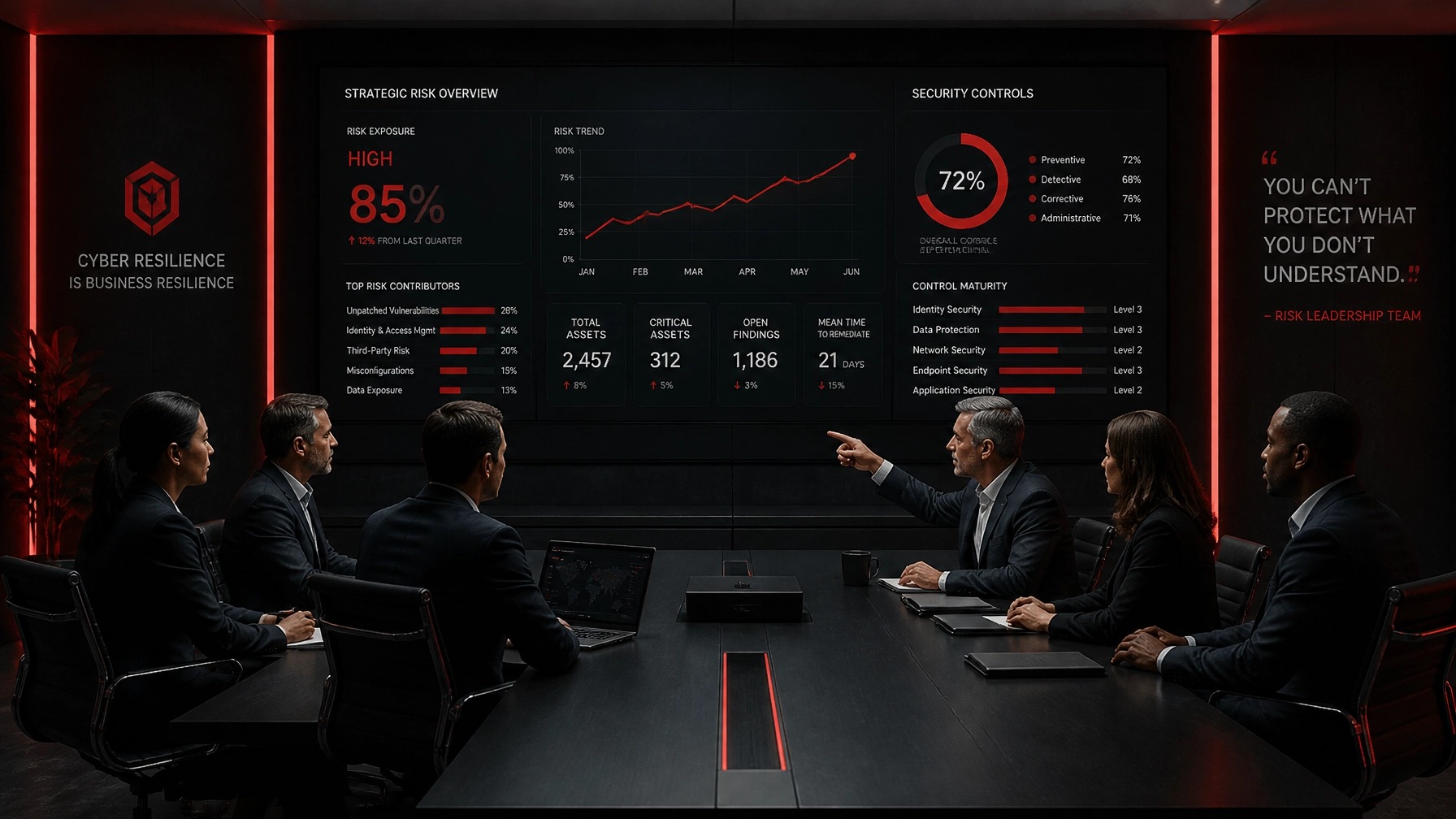
Most SOC 2 readiness assessments start with the wrong questions. They ask whether you have a policy for password complexity, whether your employee handbook mentions data classification, and whether a PDF exists to prove it. In boardroom discussions across mid-size and enterprise organizations, the standard playbook treats a SOC 2 readiness assessment as a document-collection exercise: a checkbox routine designed to satisfy an auditor before the real engineering work continues.
This is a profound strategic miscalculation.
When a readiness assessment focuses exclusively on paperwork rather than the underlying operating reality, it produces a false sense of security. You can compile a pristine binder of governance policies, but if your production infrastructure lacks strict network segmentation, identity governance, and continuous threat monitoring, your security posture remains fragile. An audit framework evaluates controls, but it cannot create security where no operating foundation exists.
Executive leadership and C-suite decision-makers must recognize that a proper SOC 2 readiness assessment is not a gap analysis of documentation. It is a rigorous stress test of your underlying security infrastructure.
Documentation Assessments vs. Foundational Assessments
See how far you are from what auditors and customers expect. Get your free Risk Snapshot.
Get your free Risk SnapshotTo understand why traditional readiness reviews fail, we must distinguish between two fundamentally different layers of enterprise security:
The Documentation Layer: This is where tools like Vanta and Drata operate. Once you have mature, functioning infrastructure, these platforms connect to your environment, gather evidence, and generate audit-ready documentation. They streamline evidence collection and streamline the paperwork for an external auditor.
The Foundational Layer: This is the actual security architecture: access controls, security policies, vendor risk management frameworks, and continuous threat monitoring — that must exist before an evidence-collection tool has anything meaningful to observe.
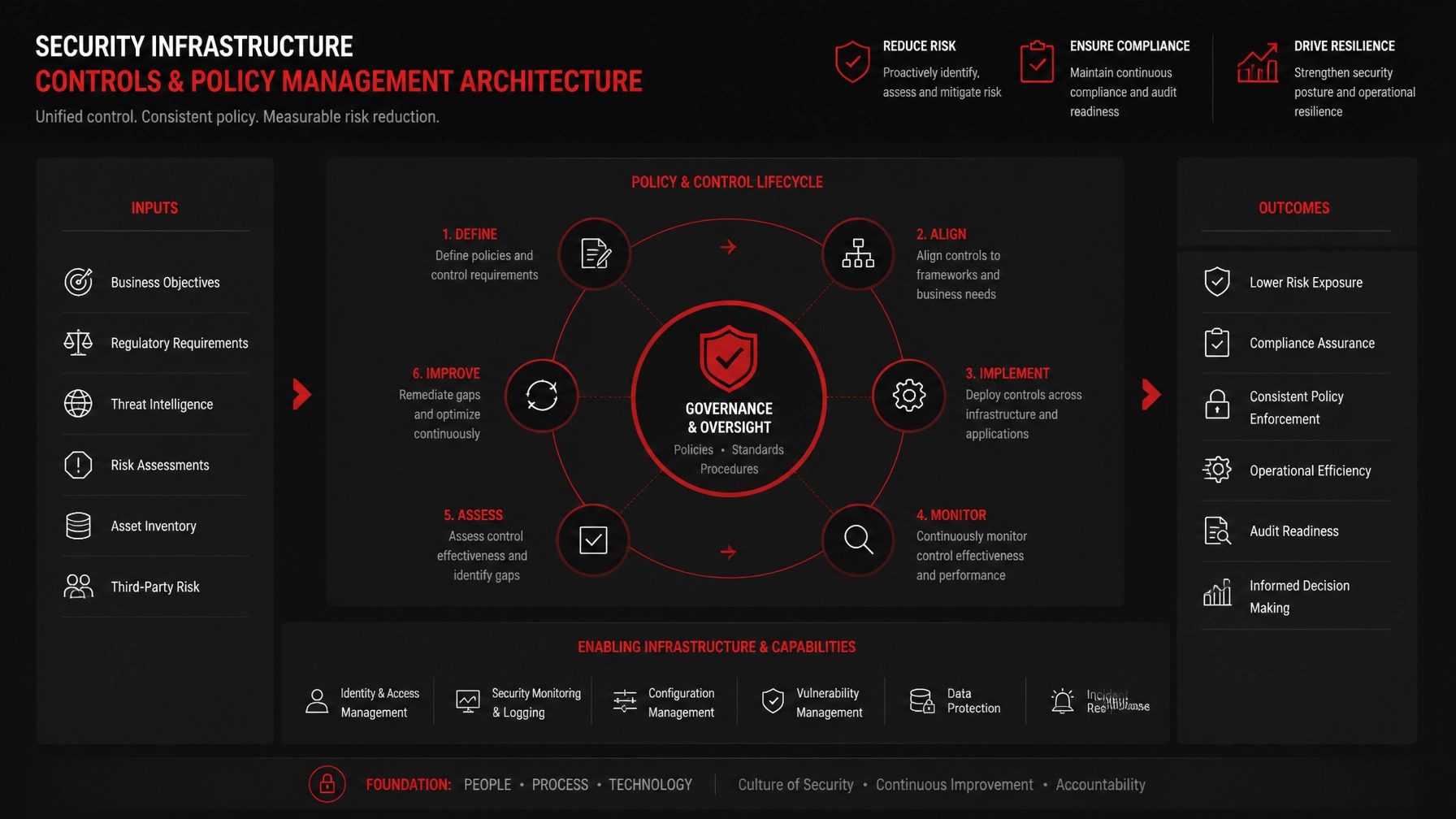
When companies attempt to conduct a readiness assessment using only documentation-first tooling without a mature underlying architecture, they encounter severe friction. They scramble to manufacture policies for controls that have not been engineered into their systems. The resulting compliance posture is brittle, defensive, and vulnerable to real-world threat actors.
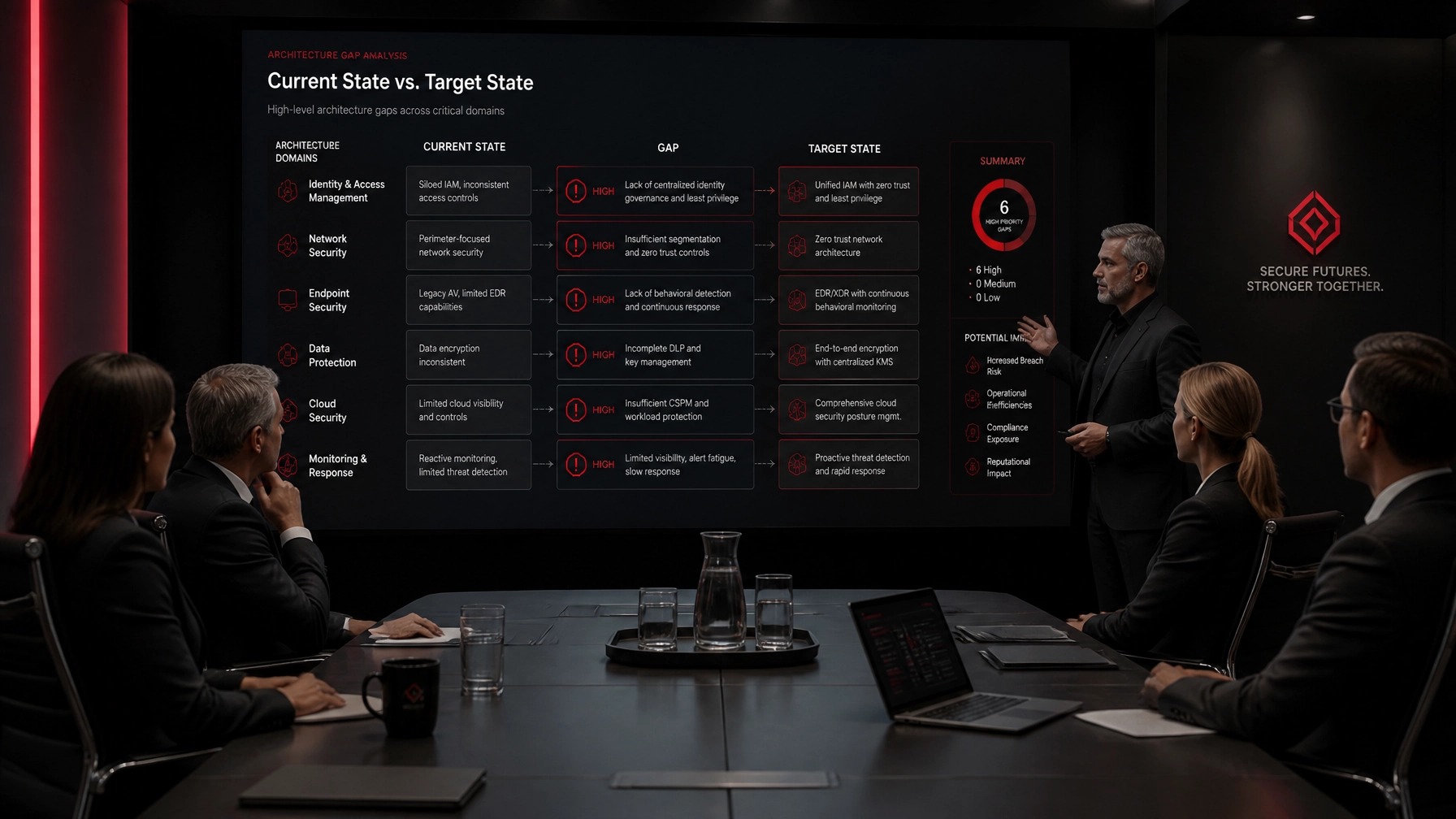
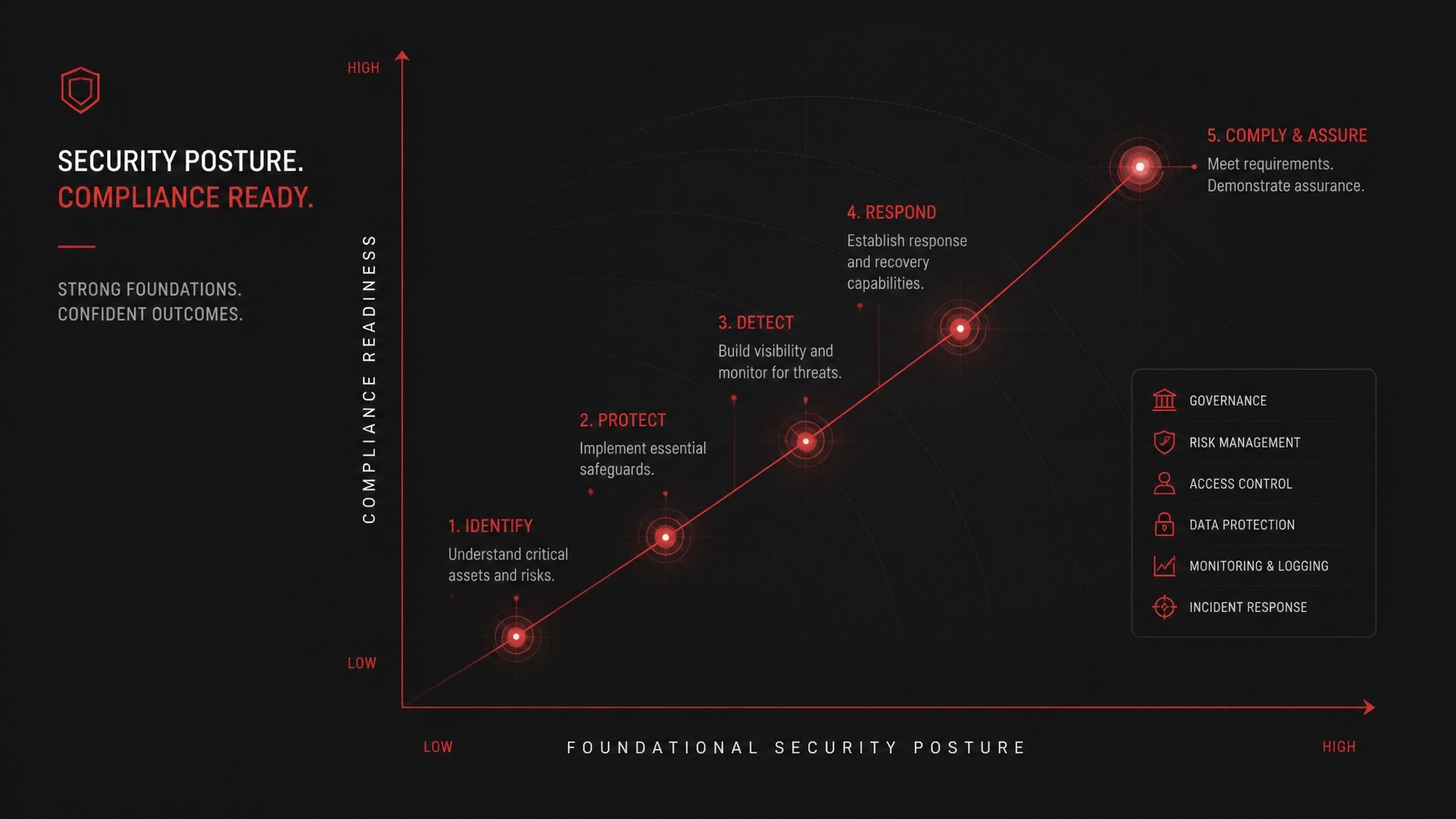
A true strategic readiness assessment begins at the infrastructure level. It evaluates whether your technical controls actively enforce least-privilege access, whether your change management pipelines have built-in verification, and whether your incident response procedures have been validated through real-world testing.
The Value of Foundational Security Tools
Enterprise leaders often fall into the trap of purchasing five-figure compliance automation platforms prematurely. They deploy evidence-collection software before establishing the technical controls the software is meant to document. The result is an administrative burden: engineers spend hours configuring integrations for infrastructure that is constantly shifting or inadequately secured.
Foundational security tools change this sequence. By prioritizing the establishment of core technical controls, policy management frameworks, and proactive risk monitoring first, organizations build genuine operational resilience.
| Dimension | Documentation-First Approach | Foundational Security Approach |
|---|---|---|
| Primary Focus | Evidence collection and policy templates | Hardened technical controls and risk mitigation |
| Infrastructure State | Addressed reactively during audit prep | Built-in from inception across engineering pipelines |
| Audit Readiness | Manufactured through administrative scrambling | Emerges as a natural, defensible byproduct |
| Long-Term Value | Compliance paperwork generation | Measurable reduction in cyber risk exposure |
When you prioritize foundational rigor, the audit process transforms. You no longer need to worry about scrambling for evidence because the evidence is a natural byproduct of how your systems operate every single day.
How Scarlet Comply Builds the Infrastructure
At Scarlet Risk, we approach risk management from the ground up. We do not sell paperwork generators or superficial checklists. We build the foundational security infrastructure that modern enterprises require to protect sensitive data and withstand sophisticated threat vectors.
Through our specialized platforms, we establish the core architecture required for long-term security maturity:
Scarlet Comply: Establishes and operationalizes the precise security policies, governance structures, and internal controls required to secure your environment. It embeds rigorous risk management directly into your operational workflow, ensuring your technical controls align with enterprise standards.
Scarlet Intel: Delivers continuous threat monitoring and proactive threat intelligence, enabling security teams to identify vulnerabilities and mitigate potential risks before they manifest into business-impacting incidents.
By establishing this foundation through Scarlet Comply and Scarlet Intel, your organization develops a defensible security posture. When the business reaches the stage where a five-figure documentation and evidence-collection platform is warranted, the heavy lifting is already complete. The controls are operational, the risk monitoring is active, and audit readiness is simply the natural byproduct of strong engineering and governance.
Elevating Your Risk Strategy
A SOC 2 readiness assessment should never be treated as an administrative hurdle to clear before moving on to product development. It is a strategic milestone that reflects the maturity of your entire organization.
If your readiness assessment only tells you what documents are missing, you are looking at the wrong layer. Shift your focus downward, toward the architecture, the controls, and the continuous threat monitoring that define true security maturity.
| Step | Description |
|---|---|
| 1. Identify | Understand critical assets and risks. |
| 2. Protect | Implement essential safeguards. |
| 3. Detect | Build visibility and monitor for threats. |
| 4. Respond | Establish response and recovery capabilities. |
| 5. Comply & Assure | Meet requirements. Demonstrate assurance. |
Ready to build the foundation before you buy the automation layer? See how Scarlet Comply and Scarlet Intel get you there — or take the 2-minute Discovery Questionnaire to find your starting point.
See how far you are from what auditors and customers expect. Get your free Risk Snapshot.
Get your free Risk Snapshot