
Your employees probably didn't wait for an official AI strategy. Shadow AI — AI tools used for company work without approval, review, or ongoing oversight — is now one of the most common unmanaged risks inside small and midsize businesses.
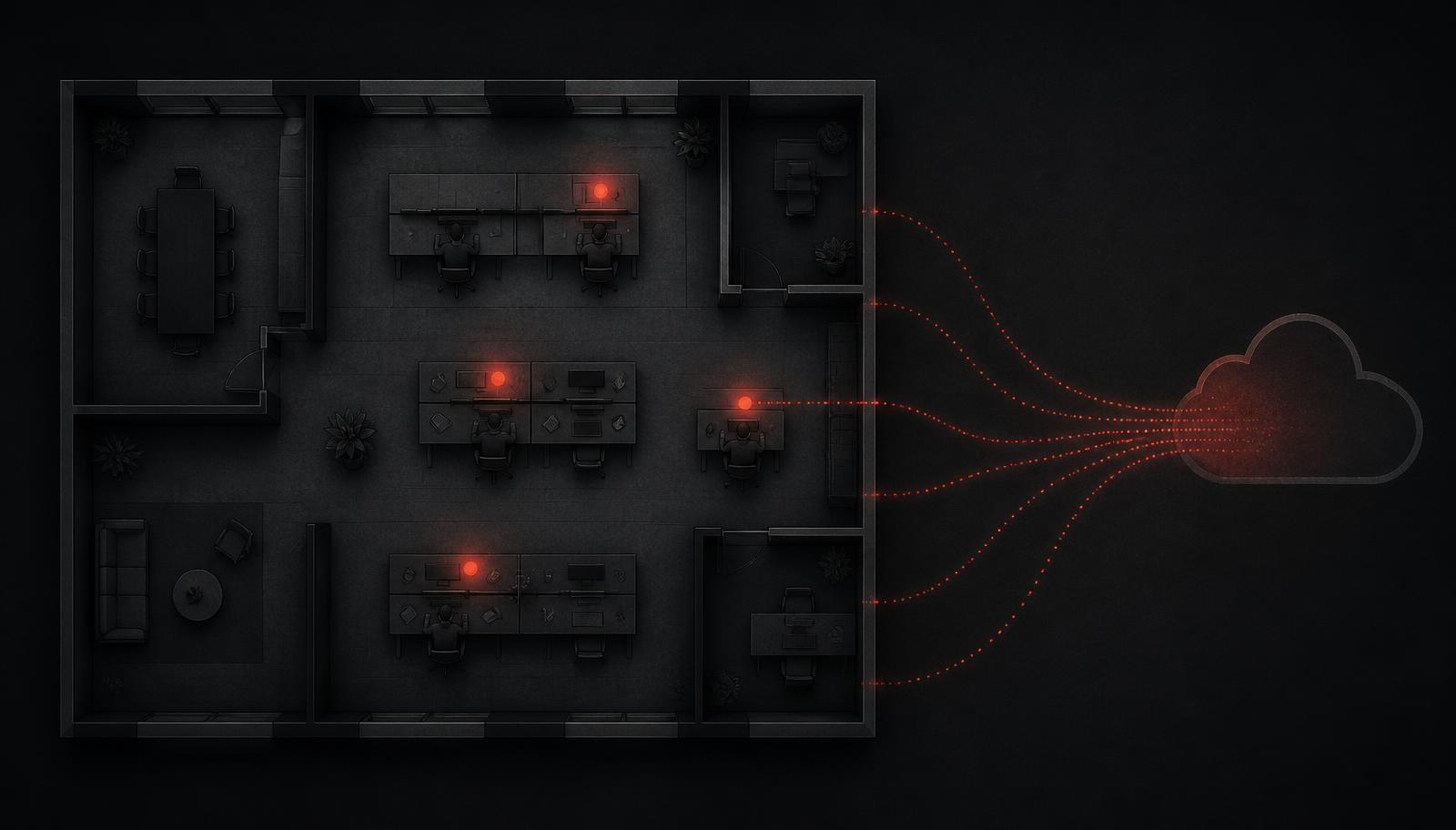
They found ChatGPT, Claude, Microsoft Copilot, Perplexity, meeting assistants, writing tools, and AI features inside software your company already uses. They started experimenting because these tools help them work faster.
Most of that use is well-intentioned. The problem is that the business often has no idea it is happening.
The AI policy problem nobody talks about
Find out which AI tools are creating risk in your business. Get your free Risk Snapshot.
Get your free Risk SnapshotA company can write a strong AI-use policy and still have no idea whether employees are following it. That's because you cannot govern tools you don't know exist.
Consider a few everyday examples:
- A salesperson pastes customer notes into a personal AI account to draft a follow-up.
- A marketing employee uploads an internal campaign plan for editing.
- A developer connects an AI coding assistant to a company repository.
- A manager uses an AI meeting assistant without checking where recordings or transcripts are stored.
- An employee uses an AI feature inside an existing SaaS product without realizing that information is being sent to a separate model or provider.
None of these employees are necessarily trying to create risk. They are trying to save time.
But depending on the provider, plan, account type, and privacy settings, submitted information may be retained, reviewed, or used to improve the service. Personal and unmanaged accounts also leave the business with limited visibility into access, settings, retention, and employee activity.
The risk isn't simply that employees are using AI. The risk is that nobody has established where, when, and how they may use it.
The market is beginning to catch up
Shadow AI is quickly becoming a recognized governance category.
Scrut recently introduced a Shadow AI Governance product designed to help security and GRC teams discover AI applications, identify who uses them, assess them, and continuously govern their use. Sprinto is also expanding its AI-governance and agentic-compliance capabilities, including tools that maintain AI registries and connect AI agents with compliance workflows.
This validates something we already believed when we launched AI Governance inside Scarlet Risk: businesses need a practical way to understand their AI exposure before unmanaged adoption gets further ahead of them.
But there is still a gap. Most enterprise governance products are designed for organizations with security teams, compliance specialists, connected identity systems, and large software budgets. Most small and midsize businesses have none of those things. The owner, operations leader, IT generalist, or office manager may be responsible for AI risk — along with ten other jobs.
That is why we built Shadow AI Lite.
What is Shadow AI Lite?
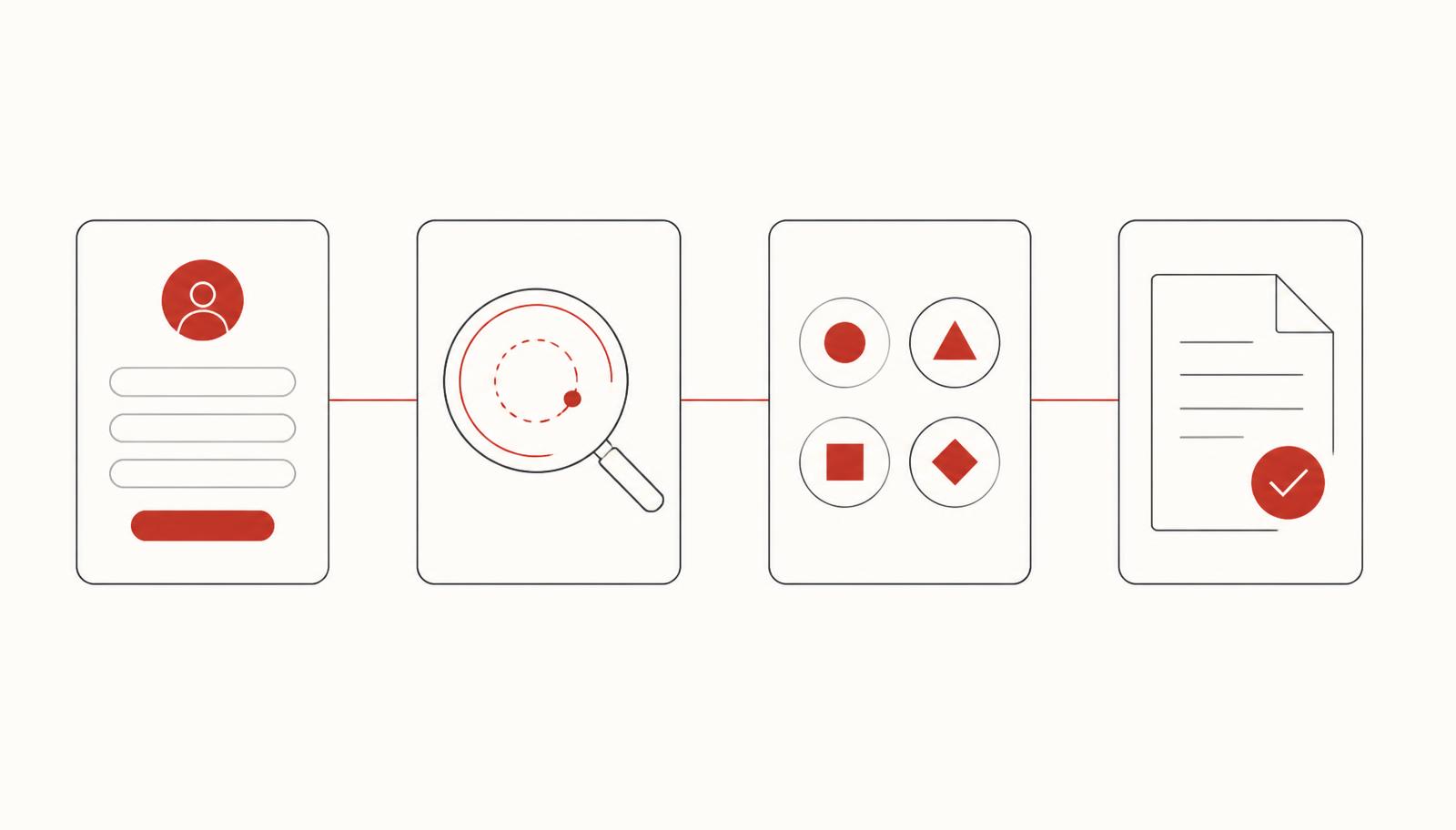
Shadow AI Lite gives small businesses a simple way to identify and manage the AI tools employees are already using. It does not require a security stack, technical integration, or dedicated compliance employee.
The process starts with Guided AI Discovery. You report the tools you have seen your team use, who uses them, what they use them for, what information could enter them, which accounts employees use, and whether the business formally approved the tool.
Scarlet then turns those answers into a plain-English risk assessment. For each tool, you receive a clear recommendation:
- Block it: The current use creates significant exposure and should stop until proper controls are established.
- Approve it with guardrails: The use may be reasonable, but the business should define account, information-handling, and review requirements first.
- Monitor it: The current use appears relatively limited, but it should remain visible and periodically reviewed.
- Approve it as-is: The reported use presents limited exposure and can continue under the company's normal policies.
You remain in control of the final decision. Scarlet provides the recommendation and reasoning, but the business decides what happens next.
From discovery to action
Finding a risk is only useful if the business knows what to do about it. Shadow AI Lite helps turn each finding into practical action. It can:
- Explain what information may be exposed.
- Show which teams and account types are involved.
- Recommend an immediate next step.
- Draft specific guardrails for an AI tool.
- Generate an AI-use policy based on the company's reported activity.
- Create an employee notice explaining the new rules.
- Add findings and decisions to the company's risk register.
That means a business can move from "we think employees are using AI" to a documented decision and staff communication without hiring a consultant or creating everything from scratch.
What good AI governance looks like for an SMB
Small-business AI governance does not need to begin with surveillance software or a complicated framework. It can begin with five basic questions:
- What AI tools are employees using?
- What business tasks are they performing with them?
- What information might employees enter?
- Are they using personal or company-managed accounts?
- Has the business approved the tool and its intended use?
Once those questions are answered, the company can establish sensible rules. For example:
- Use company-managed accounts for company work.
- Never enter passwords, security keys, regulated data, or confidential customer information.
- Remove proprietary details before submitting content.
- Require human review before AI-generated work is published or sent.
- Review new AI tools before employees adopt them.
- Maintain a simple list of approved, restricted, and blocked tools.
That is governance. It does not have to be complicated — but it does need to exist.
AI adoption is moving faster than company policy
Employees will continue finding new ways to use AI. Attempting to stop all experimentation is unlikely to work, and ignoring it is not a strategy.
The better approach is visibility followed by proportionate decisions. Some tools should be blocked. Some should be approved with clear limits. Others may only need to be documented and monitored.
The first step is knowing what is already happening.
Shadow AI Lite is available as a $5-per-month add-on for Scarlet Pro and above. You do not need an enterprise GRC team to understand where AI is creating risk in your business.
Try Shadow AI Lite in the Scarlet Risk Store.
Not ready to subscribe? The $29 Shadow AI Playbook provides a do-it-yourself process for running the audit and establishing your own AI-governance rules.
Find out which AI tools are creating risk in your business. Get your free Risk Snapshot.
Get your free Risk Snapshot